
There is a very specific, sinking feeling that every driver knows. It starts the moment a dashboard warning light flickers orange, or when you hear a rhythmic thumping sound coming from the undercarriage that definitely wasn’t there yesterday. In that moment, the immediate worry isn’t just about the car; it is about the impending logistical and financial headache of getting it fixed. Who do you call? Can you trust them? Will they fix the problem, or will they simply patch it up long enough for the warranty to expire?
For many, finding a mechanic is an exercise in vulnerability. You are handing over one of your most expensive assets to a stranger who speaks a technical language you likely do not understand. The automotive repair industry is vast, ranging from high-end dealerships to single-bay independent garages, and the quality of service varies wildly between them. The consequences of choosing the wrong shop are severe: overcharged invoices, unnecessary repairs, and, in worst-case scenarios, safety hazards that put you and your family at risk.
However, finding a “forever mechanic”—a trustworthy professional who treats your vehicle with respect and your wallet with fairness—is entirely possible. It requires shifting your mindset. You shouldn’t look for a mechanic only when you are desperate; you should look for one when you are calm. Finding the right shop is a relationship-building process. It involves vetting them for technical certification, testing their transparency with small jobs, and understanding their logistical network.
This guide will walk you through the deep vetting process. We will look at how to verify technical expertise, why specialized training matters for different vehicle types, how to spot honest diagnostic practices, and how to ensure you have a support system in place for when things go wrong on the road. By the end of this article, you will have the tools to build a partnership with a shop that keeps your vehicle running smoothly for years to come.
Verify Technical Expertise and Specialized Training
The first and most critical filter in your search for a mechanic is technical competence. It is easy for a shop to look professional with a clean waiting room and good coffee, but those amenities do not fix a transmission. You need to look past the aesthetics and examine the credentials of the people actually turning the wrenches.
Understanding Certifications
In the United States, the gold standard for automotive knowledge is the National Institute for Automotive Service Excellence (ASE). ASE certification is not a one-time diploma; it is a rigorous testing process that mechanics must retake every five years to ensure they are up to date with modern technology.
When you walk into a shop, look for the Blue Seal of Excellence. This indicates that a high percentage of the shop’s staff is certified. However, don’t just look for the logo; ask about the specific areas of certification. A mechanic certified in brakes and suspension might not be the right person to diagnose a complex electrical draw in your hybrid vehicle.
Key questions to ask regarding general expertise:
- Does the shop have access to the manufacturer-specific technical service bulletins (TSBs) for your make of car?
- Do they invest in ongoing training? Modern vehicles are essentially rolling computers; a mechanic who hasn’t taken a course in five years is likely obsolete.
- What diagnostic software do they use? Universal scanners are fine for basic codes, but deep diagnostics often require factory-level software.
The Complexity of Heavy-Duty Vehicles
If you own a heavy-duty truck or a vehicle designed for hauling, your criteria for a mechanic must shift drastically. Standard gasoline engines and light-duty suspensions are worlds apart from high-compression workhorses. Many general automotive shops will claim they can work on “anything,” but they often lack the tooling and the specific metallurgical knowledge required for heavy-duty components.
This is particularly true for the heart of the beast. You need a shop that understands the precise tolerances and immense pressures involved in diesel engine rebuilds. Unlike a standard spark-ignition engine, these powerplants rely on compression ignition and often utilize complex turbocharging and emissions systems (like DEF and DPF systems) that require specialized software to diagnose. A general mechanic might try to treat a rough idle on a heavy-duty truck the same way they would on a sedan, leading to misdiagnosis and wasted money. You want a specialist who understands the ecosystem of fuel injectors, high-pressure pumps, and cylinder liners specific to these engines.
Recreational and Niche Vehicles
The need for specialization extends to leisure vehicles as well. If you own a motorhome or a camper van, you face a unique dual challenge: you need a mechanic who understands automotive drivetrains but also one who can navigate the structural quirks of a house-on-wheels.
Many standard lifts cannot support the weight or the wheelbase of a recreational vehicle. When interviewing potential shops, specifically ask about their facility capabilities for local RV repair. Do they have a heavy-duty lift or a pit system? Do they have a lot large enough to maneuver a 30-foot vehicle safely? Furthermore, RVs often have integrated systems where the vehicle’s engine charges the “house” batteries. A mechanic unfamiliar with these crossover systems can easily fry your interior electronics while trying to fix an alternator. Finding a shop that explicitly advertises experience with these vehicle types is a safety necessity, not just a preference.

Test Diagnostic Transparency and Honesty
Once you have verified that a shop has the technical ability to do the work, you must determine if they have the moral integrity to do only the necessary work. The automotive repair industry is, unfortunately, plagued by the “upsell,” where service writers are incentivized to sell you parts you don’t actually need.
The “Small Job” Test
Never bring a mechanic a catastrophic problem on the first date. If you tow a non-running car to a new shop, you are in a position of weakness. They know you are desperate, which shifts the power dynamic.
Instead, test a new shop with a low-stakes maintenance job, such as an oil change, a tire rotation, or a state inspection. Pay attention to how they treat you during this routine visit.
- The Inspection Report: Did they return the car with a clean bill of health, or did they hand you a laundry list of “urgent” repairs totaling thousands of dollars?
- The Explanation: If they did find an issue, did they take you out to the bay to show you the play in the ball joint or the leak in the strut? Transparency is physical. A good mechanic wants you to see the problem so you understand the value of the fix.
- The Pressure: Did they use scare tactics (“I wouldn’t drive this another mile”), or did they help you prioritize? A trustworthy advisor might say, “Your brake pads are getting low, but you have another 2,000 miles safely. Let’s look at them next oil change.”
Repair vs. Replace Mentalities
One of the clearest indicators of a skilled and honest mechanic is their willingness to repair a specific component rather than replace an entire assembly. Modern dealerships and chain shops are often “parts swappers.” If a small part of a system fails, they replace the whole system because it is faster and more profitable.
The exhaust system is a classic example of this. As vehicles age, the flexible coupling in the exhaust system often rusts or cracks due to engine vibration. This results in a loud, aggressive engine noise. A “parts swapper” shop will tell you that you need an entirely new catalytic converter assembly or downpipe, costing hundreds or thousands of dollars. However, a skilled fabricator or honest mechanic knows that this can often be solved with a simple flex pipe repair. By cutting out the damaged section of mesh and welding in a new universal piece, they can restore the car to silence for a fraction of the cost. When you ask a shop about their approach to exhaust leaks or similar issues, listen for whether they discuss welding and fabrication or just “ordering a new pipe.”
The Paperwork of Trust
Trust in business is built on paper. Before any work begins, you should receive a detailed, written estimate. This document is your contract. It should separate parts costs from labor costs and include any shop supply fees or environmental disposal fees.
Crucially, this is where the term auto repair takes on legal weight. In many jurisdictions, a shop cannot exceed its written estimate by more than a certain percentage (often 10%) without your express permission. If a shop refuses to give you a written number and says, “We’ll just open it up and see,” walk away.
Furthermore, always ask for your “old parts” back. Even if you don’t want to keep a greasy water pump, the request itself signals to the shop that you are paying attention. It prevents the unscrupulous practice of charging for a part that was never actually changed. A good shop will often offer to show you the old parts before you even ask, explaining exactly how they failed.
Prioritize Climate Control and System Comfort
We often think of mechanics in terms of engines and tires—the things that make the car go. However, a significant portion of your driving experience (and safety) relies on the auxiliary systems, specifically climate control. Choosing a mechanic who understands the nuances of thermodynamics and HVAC systems is more important than most drivers realize.
Safety Implications of Climate Systems
Air conditioning is not just a luxury; it is a safety feature. In rain, snow, or high humidity, your car’s ability to defog the windshield relies entirely on the AC compressor’s ability to dehumidify the air. If your AC fails, you lose visibility. Furthermore, in modern cars, the cooling fans that keep your engine from overheating are often triggered by the AC system. A failure in one can sometimes mask or cause a failure in the other.
Proper Diagnostics vs. The “Recharge” Myth
Be wary of shops that immediately suggest a “recharge” or “top-off” when your air conditioning stops blowing cold. The AC system is a sealed loop. If it is low on refrigerant, that means there is a physical leak. Simply adding more gas is not a repair; it is a temporary band-aid that is bad for the environment and your wallet.
You need a shop that specializes in true auto air conditioning diagnostics. This involves injecting UV dye into the system to trace hairline cracks in the condenser or using “sniffer” tools to detect gas escaping from the evaporator core deep behind the dashboard. Ask the shop what their standard procedure is for an AC check. If they don’t mention leak detection, they aren’t fixing the problem.
Equipment and Environmental Compliance
Automotive refrigerants have changed. Older cars use R-134a, while most vehicles manufactured after 2015 use R-1234yf, which is more environmentally friendly but significantly more expensive and requires different machinery.
A general repair shop might not have invested in the specific machines required for R-1234yf. If they try to service your modern car with old equipment, they can cross-contaminate the system, leading to catastrophic compressor failure. Ensure the mechanic you choose has the correct certifications (Section 609 certification in the US) to handle refrigerants legally and safely.
Furthermore, ask about their warranty on climate work. Because these systems operate under high pressure and extreme temperature fluctuations, leaks can recur. A reputable shop will stand behind its auto AC repair with a guarantee that covers both parts and labor for at least 12 months. This demonstrates confidence that they replaced the leaking O-rings and crimped the lines correctly, rather than just filling them up and hoping for the best.
Review the Shop’s Network and Added Value
A truly excellent mechanic realizes that they cannot do everything alone. The automotive world is too segmented for one person to be a master of tires, transmissions, glass, upholstery, and bodywork. Therefore, a hallmark of a great shop is the quality of their professional network and the extra lengths they go to for customer convenience.
Logistics and Retrieval
Consider the logistics of a breakdown. Your car rarely dies in the shop’s parking lot; it dies on the highway or in your driveway. When vetting a mechanic, ask them about their protocol for receiving non-running vehicles.
Do they have a preferred partner for transport? The relationship between a shop and a transporter is vital. You want to know that if you call their recommended local towing company, the driver will know exactly where to drop the key, where to park the car so it doesn’t get blocked in, and how to communicate the issue to the service writer. This seamless hand-off prevents the nightmare scenario of your car being impounded because it was dropped in the wrong lot or the shop claiming they never received it.
The “White Glove” Experience
While mechanical skill is paramount, the way a shop treats your property reflects their overall attention to detail. Grease on the steering wheel, dirty footprints on the floor mat, or oil smudges on the fender are signs of a mechanic who rushes.
Look for shops that incorporate a level of care into their final delivery. High-end independent shops often offer basic car detailing or a complimentary wash with major services. While this might seem like a superficial perk, it serves a functional purpose. A mechanic who takes the time to wipe down the engine bay and vacuum the footwell is checking their work. They are looking for leaks they might have caused or loose trim pieces. It shows a pride of workmanship that usually translates to the internal mechanical repairs as well. If a shop returns your car cleaner than you left it, you can generally bet they kept the inside of your engine clean, too.
Digital Communication
In the modern era, value also comes in the form of communication. The best shops now use digital inspection tools. Instead of a phone call trying to explain a “leaking CV boot,” they send you a text message with a link. You click it and see a video or photo of your specific car, with the mechanic pointing to the tear in the rubber. This “show, don’t tell” approach builds immense trust and allows you to make informed decisions without feeling pressured on the spot.
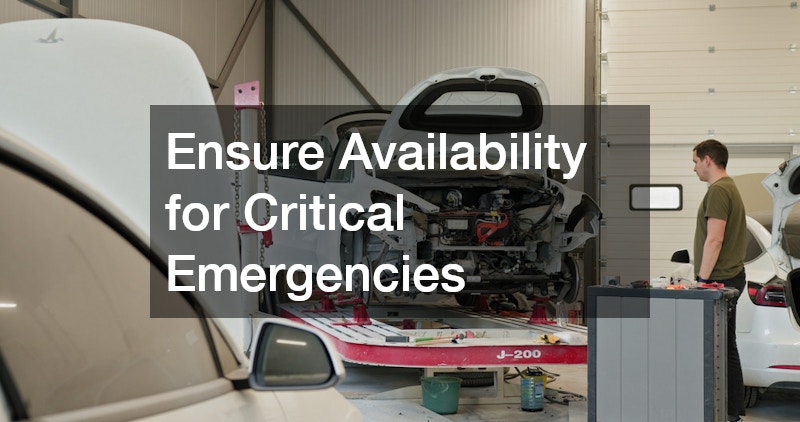
Ensure Availability for Critical Emergencies
The final piece of the puzzle is planning for the worst-case scenario. A mechanic who is brilliant from 9 to 5, Monday through Friday, is only a partial solution. Cars have a knack for breaking down on weekends, holidays, and in the middle of the night. You need to understand how your chosen shop fits into an emergency response plan.
After-Hours Protocol
Before you commit to a shop, ask them specifically: “What do I do if my car breaks down at 2 AM on a Sunday?”
A well-organized shop will have a clear answer. They will have a secure “Early Bird” or “Night Owl” key drop-box system. They will have a designated area in their lot that is well-lit and monitored by cameras, where a tow truck can leave a vehicle safely. If a shop says, “Just leave it on the street and hope for the best,” that is a red flag. You need the assurance that once your vehicle is hooked up and towed, it is going to a secure location.
Alignment with Roadside Services
You should also verify that the shop is accessible to heavy wreckers. Some shops are located in tight alleyways or have low-hanging gates that prevent larger tow trucks from entering. If you drive a large SUV or truck, this is a logistical hurdle.
Ensure that the shop is a known entity to providers of 24 hour tow truck services. When you call a tow dispatcher in the middle of the night, being able to say, “Take it to Joe’s Auto on Main Street,” and hearing the dispatcher reply, “We know exactly where that is, and we have the gate code,” provides an immense amount of relief. It eliminates the need for you to ride along in the cab or meet the driver at the shop in the dark to unlock a gate.
Building Your Safety Net
Ultimately, you should not wait for an emergency to find these numbers. Once you have selected your mechanic, ask them who they trust to pick up their own customers. Save that number in your phone immediately.
Having a vetted emergency towing company in your contacts list—one that is pre-approved by your mechanic—streamlines the entire crisis. It prevents you from calling a random predatory towing service that might overcharge you or hold your vehicle hostage. It creates a closed loop of trust: you trust the tow driver because the mechanic trusts them, and you trust the mechanic because you’ve done your homework.
Conclusion
Choosing the right mechanic is one of the most significant responsibilities of vehicle ownership. It is not a decision that should be made on the side of the road with steam pouring from your hood. It requires proactive research, a willingness to ask tough questions, and an understanding of your vehicle’s specific needs.
By verifying technical certifications, testing for transparency with minor repairs, and ensuring the shop has the logistical network to handle emergencies, you protect yourself from fraud and frustration. Remember, the goal is not just to fix a car; it is to build a professional relationship. When you find a shop that values that relationship as much as you do, you gain more than just a well-running machine—you gain peace of mind every time you turn the key. Start vetting your local shops today. Check their credentials, try them out for your next oil change, and build the safety net that will keep you on the road for the long haul.