
As a parent, it is easy to assume that a child’s occasional complaint about a tooth or a gap in their smile is just a normal part of growing up. But some dental issues are early warning signs that, left unaddressed, can turn into bigger problems down the road. Knowing what to watch for can save your child pain, time, and even costly treatment later. This guide walks through the key signals that mean it is time to book an appointment rather than wait and see.
Persistent Tooth Pain or Sensitivity
A child who winces while eating ice cream or avoids chewing on one side of their mouth is communicating something important, even if they cannot fully explain it. Tooth pain rarely resolves on its own and often points to decay, a cracked tooth, or an emerging infection beneath the gumline. Waiting too long can allow a small cavity to progress into something requiring a root canal or extraction. Pay close attention to patterns, since sensitivity that shows up repeatedly after meals is different from a one-time fluke. A fleeting twinge after a very cold drink might just mean enamel is temporarily reactive, but discomfort that lingers for more than a few seconds, or returns every time your child eats something sweet, hot, or cold, suggests the nerve inside the tooth may already be irritated or inflamed. Other clues are easy to miss if you are not looking for them. Watch for swelling along the gumline, a small bump that looks like a pimple near a tooth, bad breath that does not improve with brushing, or a visible dark spot on a tooth’s surface. Children may also start favoring soft foods, refusing to brush a specific area, or complaining of pain that wakes them up at night, which is often a sign the issue has reached the inner pulp of the tooth. Because baby teeth have thinner enamel than adult teeth, decay can spread faster and reach the nerve in a matter of months rather than years. A dentist can usually address the problem with a simple filling if caught early, but delaying care even a few weeks can turn a minor repair into a more invasive and costly procedure.
- Sharp pain when biting down on food, especially on nuts, apples, or crusty bread
- Lingering sensitivity to hot or cold beverages that persists more than a few seconds after eating or drinking
- Avoidance of chewing on a specific side of the mouth, often shown by one-sided chewing habits
- Complaints of a toothache that wakes them up at night or disrupts falling asleep
- Swelling near the jaw or cheek area, which can signal an abscess or infection requiring urgent care
- Unexplained irritability or appetite changes, particularly refusing crunchy or cold foods
- Visible pimple-like bumps on the gums, which may indicate a dental infection
Visible Discoloration or Spots on Teeth
White, brown, or black spots on a child’s teeth are not just cosmetic quirks; they are often the first visible sign of enamel breakdown. Early decay can look like a chalky white patch before it progresses to a darker, more obvious cavity. Catching discoloration early gives dentists more options for conservative treatment, such as fluoride applications or minimal fillings, instead of more invasive work later. It is worth doing a quick visual check during brushing time every so often, especially for younger kids who still need help with oral hygiene.
- Chalky white patches near the gumline
- Brown or black spots on chewing surfaces
- Discoloration that appears after a dental injury
- Uneven coloring that was not present a few months ago
Crowded, Crooked, or Misaligned Teeth
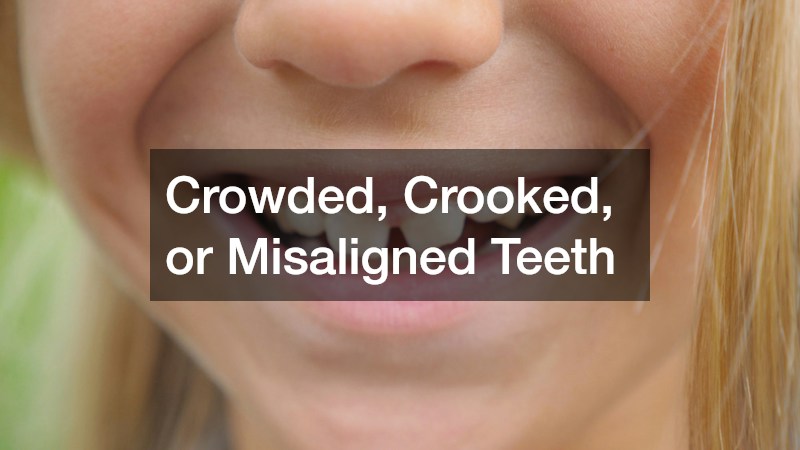
Many parents notice crowding or crooked teeth as their child’s permanent teeth start coming in, often around ages six to twelve. While some irregularity is normal during this transition, significant overlapping, gaps, or a bite that does not line up correctly can signal a need for orthodontic evaluation. Addressing alignment issues early can sometimes guide jaw growth and reduce the complexity of treatment in the teenage years. Today, families have more options than traditional metal braces, and many orthodontic providers now offer Invisalign for older kids and teens whose cases are suited to clear aligners rather than wires.
It helps to understand that not every crooked tooth needs immediate correction, but certain signs suggest it is time for a professional opinion sooner rather than later. A bite that causes the upper and lower jaws to meet unevenly can affect chewing, speech, and even facial development over time. If your child seems self-conscious about their smile or has started avoiding photos, that emotional impact is worth factoring into the decision as well.
- Teeth that overlap or appear severely crowded
- A noticeable gap between the upper and lower teeth when biting
- Jaw that shifts or clicks when opening and closing the mouth
- Teeth erupting in unusual positions or at odd angles
Bleeding or Swollen Gums During Brushing
Occasional light bleeding from vigorous brushing is usually harmless, but gums that bleed regularly or appear puffy and red are often a sign of early gum disease. Children can develop gingivitis just like adults, particularly if plaque buildup is not being removed effectively during daily brushing and flossing. Left untreated, inflamed gums can progress to more serious periodontal issues that affect the health of the surrounding teeth and bone. A professional cleaning combined with better at-home habits usually resolves the problem quickly when caught early.
- Gums that bleed with normal brushing pressure
- Redness or puffiness along the gumline
- Persistent bad breath despite regular brushing
- Gums that appear to be pulling away from the teeth
Delayed or Unusual Tooth Development
Every child’s timeline for losing baby teeth and growing in permanent ones is a little different, but significant delays or irregularities deserve a closer look. If a child has not lost certain baby teeth by the expected age range, or if permanent teeth are coming in before the baby teeth have fallen out, it can lead to crowding or alignment problems. A qualified kids dentist can take X-rays to see what is happening beneath the gums and determine whether intervention is needed or whether it is simply a normal variation. Catching developmental issues early often means simpler, less invasive treatment down the line.
- Baby teeth that remain well past the typical age for loss
- Permanent teeth emerging behind or in front of baby teeth still in place
- Missing teeth that never seem to erupt
- Noticeable asymmetry between the left and right sides of the mouth
Ongoing Thumb-Sucking or Pacifier Habits
Thumb-sucking and pacifier use are common and generally harmless in infancy, but when these habits continue past the age of four or five, they can start to affect the shape of the palate and the alignment of incoming teeth. Prolonged sucking habits are one of the more overlooked contributors to open bites and protruding front teeth. Gently encouraging a child to stop, paired with professional guidance if the habit proves difficult to break, can prevent the need for more significant correction later. A dental professional can also assess whether any early changes to the bite have already occurred.
- Habit continuing past age four or five
- Visible gap between upper and lower front teeth when the mouth is closed
- Changes in speech, such as a lisp
- Narrowing of the upper palate noticeable during routine checkups
Children’s dental needs change quickly, and small issues can escalate if they go unnoticed for too long. Paying attention to pain, discoloration, alignment, gum health, developmental timing, and lingering habits gives you a clear picture of when professional care is warranted. If any of these signs sound familiar, scheduling a checkup sooner rather than later is the simplest way to protect your child’s smile for years to come. Trust your instincts as a parent, and when in doubt, let a professional take a closer look.